By Garagetex ·
Walk down the aisle at any big-box hardware store and you'll find garage floor paint, "epoxy" kits and concrete sealers, all promising a tough, good-looking floor. A few months into a Vaughan or Brampton winter, some of those floors are peeling in strips right where the tires sit.
Here's a straight comparison of the main options, what each one is good at, and why the preparation matters more than the name on the can.
What an Ontario garage floor has to survive
- Salty slush dripping off the car for months
- Freeze-thaw near the door, where the floor gets wet and then freezes
- Hot tires in summer, which can lift weak coatings (often called hot tire pickup)
- Moisture coming up through the slab from below
- Dropped tools, bikes, snow blowers and wet winter boots
Whatever you choose has to handle all of that.
Concrete sealer
What it is. A clear product that either soaks into the concrete (penetrating sealers, often silane or siloxane based) or forms a thin film on top (acrylic sealers).
Good at. Penetrating sealers help bare concrete shed water and salt without changing how it looks. They're the simplest protection, and a reasonable choice for a newer slab you don't want to coat.
Not so good at. They don't hide stains or wear, they don't make the floor much easier to clean, and they need to be reapplied every so often. Film-forming acrylics tend to wear off in the tire paths.
Garage floor paint and one-part "epoxy" paint
What it is. Latex or epoxy-fortified floor paint, rolled straight on.
Good at. It's cheap and quick, and it brightens a dull garage.
Not so good at. It's a thin layer. On concrete that was only washed or etched, it's prone to peeling under hot tires and wearing through where the car turns. Once it chips, salt water gets underneath.
DIY two-part epoxy kits
What it is. A two-part product you mix and roll on yourself, sometimes with decorative flakes.
Good at. Tougher than paint when it goes on over well-prepared concrete.
Not so good at. The result depends almost entirely on the prep. Kits usually rely on cleaning or etching rather than grinding, the working time once mixed is short, and many build a thinner layer than professional systems. Some epoxies also yellow in sunlight, which shows near the door.
Professionally installed coating systems
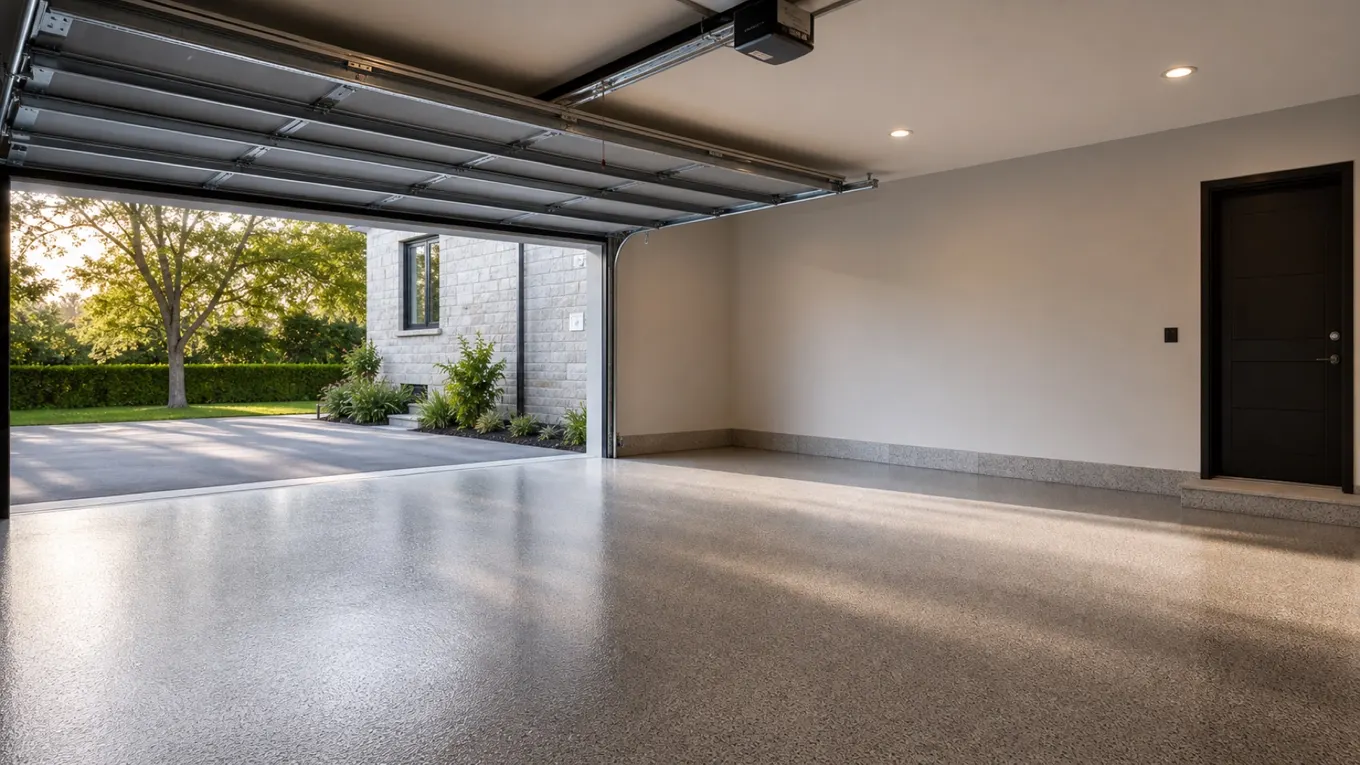
What it is. A multi-layer system installed over concrete that has been mechanically ground and repaired. Typically a base coat, a broadcast of decorative flake and a clear, UV-stable topcoat.
Good at. It builds a sealed surface that salt water sits on top of instead of soaking in. It squeegees and wipes clean, the flake hides dirt and adds grip, and the ground surface gives the coating something solid to bond to.
Not so good at. It costs more than a can of paint and takes a day or two. And it's only as good as the prep, so ask any installer exactly how they'll prepare your floor.
Why preparation matters more than the product
A common story with peeling garage floors: the coating went over concrete that was never properly prepared.
The top of a concrete slab is often weak and smooth, and over the years it collects oil, salt residue and old sealer. Washing doesn't remove that. Mechanical grinding opens up the surface so the coating bonds to sound concrete. Cracks, pits and flaking areas need to be repaired first, or they show through and can fail later.
Moisture matters too. A slab with moisture coming up from below can push a coating off, so a proper site check looks for that before anything goes down.
That's how we approach our garage floor coating service: check the slab, grind and repair it, then install the coating, the flake and the topcoat.
A quick way to decide
- You want simple protection for a newer, bare slab: a penetrating sealer, reapplied as needed
- You want a quick refresh and don't park on it much: paint can work, but expect touch-ups
- You want a floor that stands up to salt, tires and cleanup: a professionally prepared, multi-layer coating
Timing in Ontario
Coatings need the slab and the air to be warm enough to cure properly, so spring through early fall is the easiest window. Late-fall installs are possible in mild stretches, but sometimes it's smarter to use containment mats through the winter and coat in spring. Our post on road salt and garage floors has tips for getting through the winter, and our FAQ answers more coating questions.
Where we work
Garagetex coats garage floors in Vaughan, Markham, Richmond Hill, Brampton, Mississauga and Oakville, plus Pickering, Ajax and Whitby.
Thinking about coating your garage floor? Call or text Garagetex at (365) 360-4168, or request a callback on our contact page. A few photos of the floor, including the worst spots, help us give you a straight answer.