By Garagetex ·
By March, a lot of garage floors in Woodbridge, Maple and Richmond Hill look the same: white, crusty rings where the tires sat all winter, a flaky surface near the door and maybe some pitting that wasn't there a few years ago.
That's road salt and freeze-thaw working together. Here's what's going on, what you can do this winter and when a floor coating makes sense.
What salt does to a garage floor
Every time you pull in, your car drops a load of salty slush. It melts, soaks into the top of the concrete and dries out, leaving the salt behind. Repeat all winter.
Two things happen:
- Freeze-thaw damage. Concrete is porous. Salty water soaks in, and when the garage drops below freezing, which happens near the door in a lot of attached garages, that water freezes and expands. Over time it breaks off the top layer. That's called scaling or spalling: the flaky, pitted surface you see near the door and under the tires.
- Salt residue. The white crust and rings left behind when the water evaporates. It gets tracked into the house, and it holds moisture against the floor.
Newer concrete, in its first winter or two, is especially vulnerable.
Signs your floor is taking damage
- White rings or crust where the car parks
- Rough, sandy or flaking patches, often near the door
- Small pits or exposed stones in the surface
- Cracks that have grown since last year
- A floor that never looks clean, even right after washing
What you can do this winter
None of this costs much, and it slows the damage down:
- Use containment mats. A rubber garage mat with a raised edge goes under each car and catches the meltwater. Empty or squeegee it out on mild days.
- Squeegee the slush out. A floor squeegee pushes meltwater out the door or toward a drain before it soaks in.
- Rinse on mild days. A January thaw is a good chance to hose off salt residue and push it outside.
- Don't chip at ice on the floor. You'll take concrete with it.
- Keep salt on the driveway, not in the garage. If you need traction inside, use sand.
When a floor coating makes sense
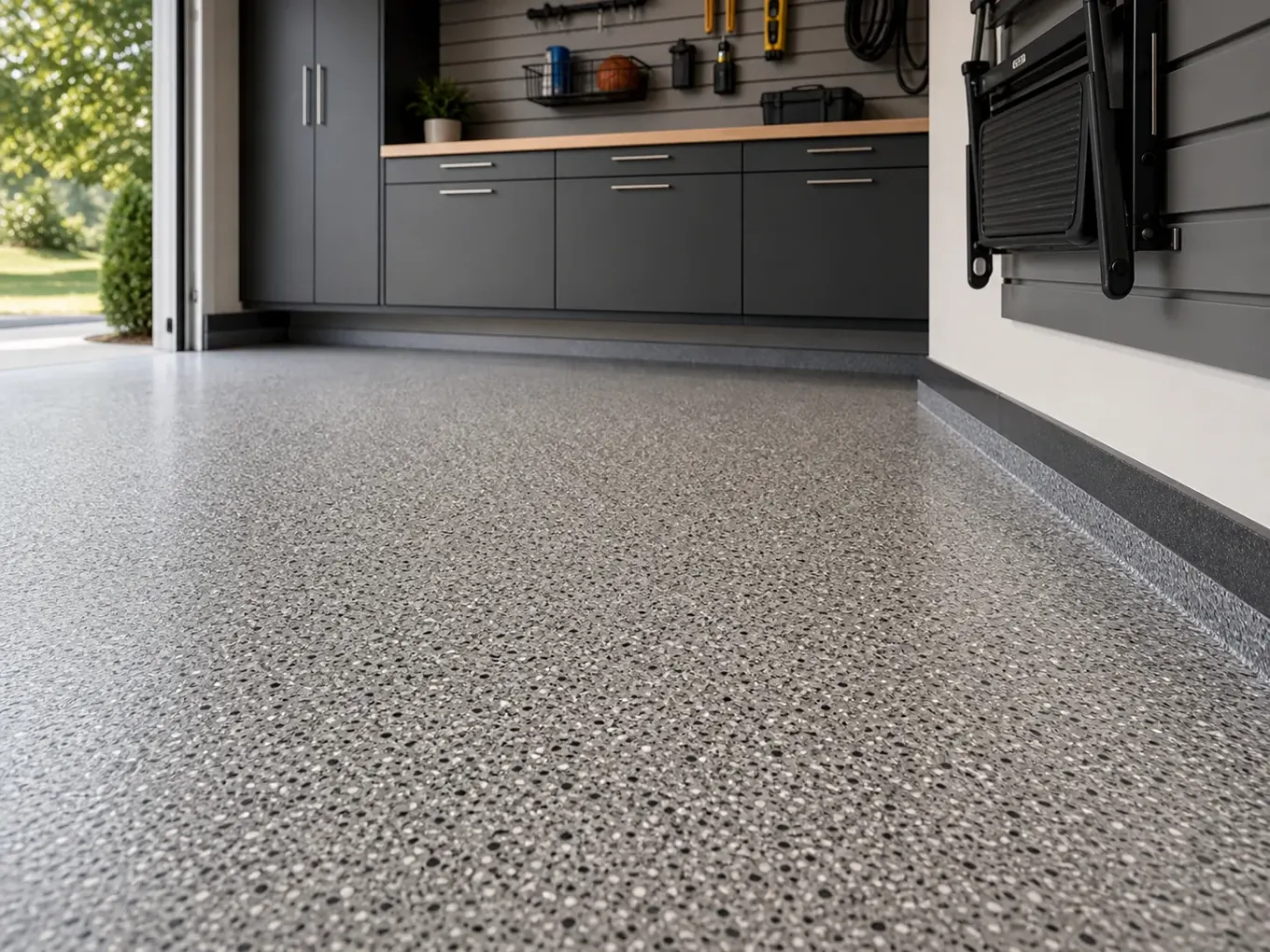
A garage floor coating puts a tough, sealed layer over the concrete, so salt water sits on top instead of soaking in. Meltwater and salt residue squeegee or wipe off, and the floor is much easier to keep clean.
But a coating is only as good as the preparation under it. A proper job means:
- Checking the slab. Cracks, scaling, moisture coming up through the concrete and the condition of the edges.
- Mechanical preparation. The concrete is ground, not just washed, so the coating can bond. Coatings rolled over unprepared concrete are much more likely to peel.
- Repairing cracks and damaged areas before any coating goes down.
- Decorative flake and a UV-stable topcoat for grip and durability.
That's how we approach our garage floor coating service. Most residential garages take one to two days, depending on repairs and the coating system.
Can you coat in late fall?
It depends on the weather and the product. Coatings need the slab and the air to be warm enough to cure properly. In the GTA, late-fall projects are possible during mild stretches, but sometimes it's smarter to protect the floor with mats through the winter and book the coating for spring. We'll tell you straight which makes sense for your garage.
If the floor is already badly damaged
Scaled or pitted concrete can usually still be coated once it's repaired. Deep damage, large cracks that keep moving or a slab with moisture problems may need more work first. That's what the site check is for.
While you're looking at the floor
Salt slush also sits against the bottom of your garage door. If the bottom panel is rusting or the door isn't closing evenly, see our garage door repair page.
Where we work
Garagetex coats garage floors and services garage doors in Vaughan, Richmond Hill, Markham, Brampton, Mississauga and Oakville, plus Pickering, Ajax and Whitby. Have a look at some of our projects.
Floor looking rough after last winter? Call or text Garagetex at (365) 360-4168, or request a callback on our contact page. A couple of photos of the worst spots help.